


Latest Search

Quote

| Back Zoom + Zoom - | ||||
|
<Research> G Sachs Expects Fed to Keep Rates Unchanged, Remove Prior Easing Bias from Forward Guidance
Recommend 6 Positive 5 Negative 6 |
||||
|
||||
|
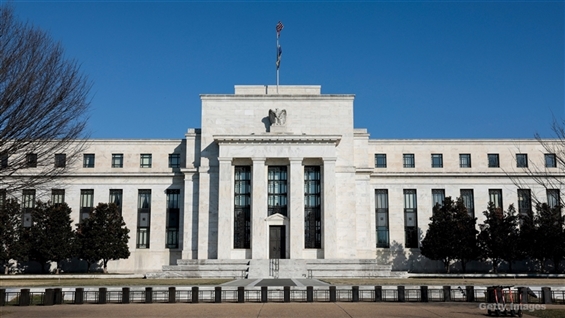
The US Federal Reserve began a two-day policy meeting on Tuesday. In a report, G Sachs said that since the last Federal Reserve meeting, the most significant change in economic data has been a notable rebound in job growth, putting the labor market on a more solid footing. This shifts the focus to whether inflation has reached a concerning level sufficient to justify a rate hike. War and rising oil prices could push headline Personal Consumption Expenditures (PCE) inflation above 4% and keep core PCE inflation above 3% for the full year. So far, however, the inflation impact appears more like the typical transmission of a large oil price shock, rather than the broad supply shortages and price surges seen during the pandemic. G Sachs continues to view the likelihood of a rate hike as low for two reasons. First, the Federal Reserve has typically not raised rates in response to oil price shocks. Second, the current environment-particularly a more balanced labor market-reduces the risk that an oil shock will trigger self-sustaining high inflation. That said, some worrying signs have emerged. If inflation expectations rise significantly or if high inflation becomes broad-based across categories, the probability of a rate hike would increase. At the June meeting, the first chaired by Federal Reserve Chair Kevin Warsh, the Federal Reserve is likely to keep rates unchanged and remove its prior forward guidance that had hinted at rate cuts. G Sachs expects the Federal Reserve to delete only the phrase referring to the "extent and timing of additional adjustments" (regarding the federal funds rate) from the post-meeting statement, though there remains considerable scope for further simplification. In line with a shift toward more balanced guidance, G Sachs expects the median dot plot to show no change in rates for 2026, with three participants projecting one rate hike later this year. However, G Sachs ultimately expects the median dot plot to still indicate two rate cuts, most likely one each in 2027 and 2028. Some estimates of the neutral rate may move higher, but the median is unlikely to rise. G Sachs assumes that, based on his past criticism of forward guidance, Warsh will not submit his own dot projection, though this remains uncertain. G Sachs said the 2026 economic projections may show a slight downward revision to GDP growth (down 0.2 ppts to a 2.2% 4Q-over-4Q annualized rate), a slight decline in the unemployment rate (down 0.1 ppts to 4.3%), and substantial upward revisions to headline inflation (up 1.2 ppts to 3.9%) and core inflation (up 0.6 ppts to 3.3%). G Sachs expects the 2027 inflation forecast to be revised up by 0.1 ppts to 2.3%, implying that the impact of the war on inflation will be confined to this year. As core inflation on a YoY basis may take considerable time to approach 2%, G Sachs has incorporated the final two rate cuts into its forecast, scheduled for June and December 2027. If rates remain on hold for an extended period and the economy continues to perform well, the probability would increase that the Federal Reserve concludes the federal funds rate is already at an appropriate level. G Sachs sees a prolonged pause as a reasonable alternative scenario to its baseline. Even so, its probability-weighted Federal Reserve outlook remains notably more dovish than market pricing, mainly reflecting its skepticism toward further rate hikes. (ad/j) Auto-translated by AI This article was automatically translated by AI, the original language version should be considered the authoritative version. AASTOCKS.com Limited does not guarantee its accuracy or completeness and accepts no liability for any damages or losses arising from the use of this translation. More Details
AASTOCKS Financial News |
||||
Copied to Clipboard
 |
||||


